More
    Home Blog Page 59

    Mid-Century Modern Marvels

    0

    Jillopy’s Jill and Steven Fraser bring fine lines and classic design to the Boise Bench and beyond

    By Nicole Sharp
    Photography by Copper Chadwick

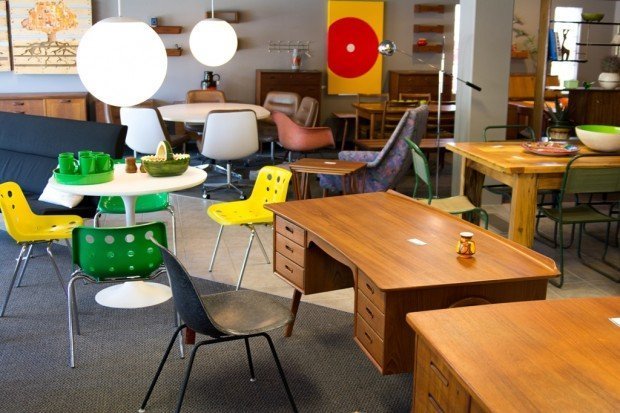
    A bright orange van sits in front of Jillopy’s colorful and inviting Latah storefront. Peeking through the window you’ll see that Jillopy is a furniture store – and it looks so cool that you just can’t help yourself from stepping inside.
    Once you find yourself drawn in, you will meet one, if not both of the owners, Jill and Steven Fraser. And after a quick look around and just a few moments of conversation it’s hard to discern if it was that orange van, the furniture, or the energy of the owners that drew you in.

    Either way, chances are, you will be telling your friends the same thing everyone who enters the Fraser’s shop finds themselves saying: you have got to check out this cool store off of Latah called Jillopy.

    The Fraser’s story is one that has always involved passion for well-built, reliable things. They have always had the ability to look at something others would throw away and see the beauty of what could be.

    Jill and Steven purchased a 1950’s home that most folks thought would be better off demolished. They worked on the house, turning something run down and ‘ruined’ into the reality they knew it could be. It was in working on the house that their love for design took center stage.

    The dream of opening a furniture store came to fruition with Jillopy: a play on the name for an old piece of junk – a jalopy if you will – mixed with Jill’s name and the passion that the couple has for furniture that some consider “used.”

    Jillopy specializes in selling mid-century modern furniture. Think Scandinavian design. Furniture from the mid-20th century, designed with beautiful, clean lines that holds its value. “Where else can you find a 1949 sofa that still retains its value?” Steven said. Jillopy’s furniture is as “green” as it gets, though you would swear the pieces in the store are new they are so well built.

    Over the last several years a rise in mid-century modern movement has spread throughout the design world. People are interested in furniture that has been built to last. This isn’t a fleeting trend either, and the Fraser’s help to educate their customers on the timeless, artistic design of the mid-century modern furniture they sell.

    On the particular day I walked into Jillopy, Jill was cleaning a white Barcelona day bed, and Steven was finishing up some paperwork as he was headed to Denmark the next day.

    Steven buys a lot of the furniture they sell from Denmark. He personally monitors the process of buying and shipping each piece until the moment he unloads it at the store. Why Denmark? “To us, it’s top of the line.” Steven said.

    The Fraser’s enjoy working, selling, and looking at well-crafted Danish work. They offer beautiful Danish pieces from well-known designers, but “the furniture we carry is about good design, it’s not always about a name.” said Jill.

    To put it simply, each and every item in Jillopy has a story behind it that the Fraser’s can tell you. Their shop is “not just about putting pieces in front of people, it’s about fine tuning it, cleaning it up, and making it showroom ready.” Jill said.

    The Fraser’s business philosophy is as honest as they are. They have a “great variety of pieces they sell only to Idaho. Keep it local. Keep business personal. If a piece of furniture leaves the area, how can you build a business through word of mouth?” Steven said. “We’re pretty passionate about what we’re doing. We believe in this store and we’re not giving up.”

    Jillopy isn’t just a furniture store; once you buy a piece of furniture from Jill and Steven, chances are you will begin a relationship with these amazing folks as well.

    For more information on Jillopy visit www.jillopymidcenturymodern.com or find them Facebook.
    Foaming at the Mouth

    0

    The locavore movement has spilled into craft beer and Boise’s microbreweries are expanding their facilities to meet the increasing demand

    By Ken Levy
    Photography by Copper Chadwick

    Whether quaffing a local in-house brew or picking up six packs from longtime or expanding Idaho breweries, people are foaming at the mouth for more locally made beer.

    Matt Gelsthorpe, beer buyer for the Boise Coop, reports that the craft beer market is growing throughout Idaho, as more and more people want their food and beverages sourced locally.

    In fact, two local microbreweries have recently found homes in Garden City to meet demand, and more are on the way.

    Crooked Fence Brewery recently celebrated its first anniversary in the Treasure Valley and has already made quite a name for itself.

    Andy Leathers, who runs Crooked Fence along with brewer Kris Price and partners Kelly Knopp (marketing/artwork) and Travis Krawl (investor/drinker), said Crooked Fence brewed just over 1,100 barrels its first year and anticipates that number to rise to 3,000 barrels in 2013.

    The owners feel that the Garden City area is up and coming and the brewery, according to Leathers, “will be opening a second location – The Barrelhouse Brewpub – about a half-mile from the brewery” in mid-June.

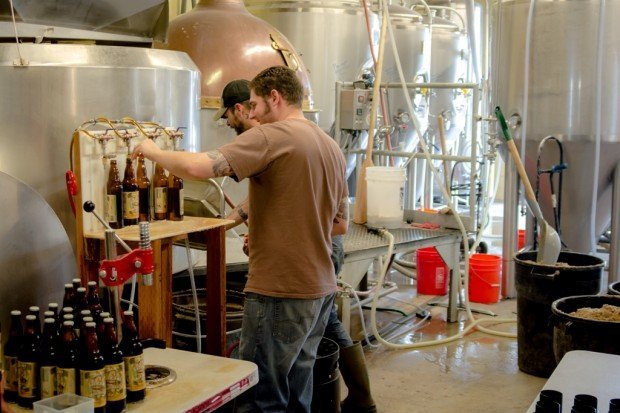
    Currently, Crooked Fence has about 175 tap handles throughout the local market; with 22 ounce bottles and 12 ounce cans available at local retailers, including the Co-op. “We hope to expand again to about 5,000 barrels soon,” Leathers said. “We are only available in Idaho right now. We feel there is plenty of room for growth here still.”

    Also in Garden City, Payette Brewing Company, celebrating its second year, brewed just over 2,300 barrels last year, and is on pace to do over 5,000 this year, said founder Michael Francis.

    “The draw to come here was more a desire to live in Boise than a business decision, although I did see a great opportunity for a new craft brewery in Boise,” Francis said. “At the time, there was not a true production brewery in Boise, though many of the brewpubs distributed their products, so I saw potential for a brewery that focused on selling beer to bars and restaurants.”

    Currently, Payette Brewing Co. is wrapping up a 4,000 square-foot warehouse facility to keg and can its beers, and will continue to add capacity as it reaches into new markets in the northwest.

    TableRock Brewery, Boise’s oldest, got its start during the beer-boom cycle of the 1990s, Gelsthorpe said. Founded in 1991, the brewpub brews and serves its own creations, including Hophead IPA, Whitebird Wheat, Hoptilla and Copperhead Red, using a 12-barrel brewing system.

    Boise’s Sockeye Brewery has experienced exponential growth since brewing from a four-barrel system in 1996 to meet local restaurant demand. When the microbrew scene exploded in 2011, Sockeye produced 1,500 barrels of its microbrews. Now they’re expanding with a 12,000 square-foot location that will allow them to produce 3,000 barrels a year.

    Boise microbreweries Highlands Hollow and The Ram serve their own beers in-house, although the former produces for other restaurants and bars as well.

    Gelsthorpe said microbrew prices appear headed down and closer to those mass produced, adding to their popularity.

    Stick and Ball

    0

    With summer in full swing, Bike Polo offers Boise cyclists a fresh take on a classic sport


    By Kirk Walton
    Photography by Copper Chadwick

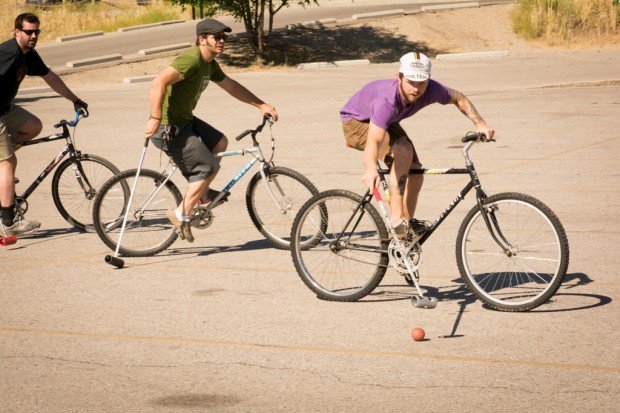
    On a summer evening, you might be surprised to see a pack of cyclists swinging mallets as they advance a ball up and down a green field or a vacant parking lot somewhere in the wilds of Boise. Bike polo, a fun interpretation of an old sport, is taking root across the world and not surprisingly, Boise is no exception.

    Andrew Little, owner of the local bike repair business Got Fix’d, has been involved with the bike polo scene for a few years now and recommends it to anyone looking for a fun, inexpensive way to stay active. “The transition from high school or collegiate level sports to a life without them can be hard for many youths. Bike polo can help fill that gap,” Little explains.

    Unlike many sports, bike polo doesn’t require a large investment in specialized sporting goods. All you need is a bike and a mallet. Though specialized mallets and other materials for bike polo do exist, Little says the majority of materials he plays with are recycled. “Players make mallets out of old ski poles and pipe, use common street hockey balls, and make basic do-it-yourself modifications to their bikes,” he explains.

    While any bike is acceptable, many polo players prefer a bike with lower gears for superior acceleration. Other than that, the only other common bike modification is wheel covers. These covers prevent mallets from being lodged in tires and are often colored or painted to represent the individual or team. Whenever they want to play, a few calls are made and a small group of polo players gather at a park, parking lot, or any open space they can find. In the future, Little says it would be ideal to have a dedicated hard surface polo court, but for now they make do with what they have.

    Bike polo is similar to traditional polo, but instead of riding horses, players balance on bicycles. As a sport, bike polo is a very organic experience and still something that is maturing. Rules vary by city, and games are often played with homemade materials.

    Essentially though, bike polo consists of two teams of three, a field or hard surface “court,” mallets, bikes, makeshift goals, and a ball. To score, one team must strike the ball through the opposing team’s goal using their mallets. While the rules are pretty relaxed, there’s a general understanding among players about contact and fouls. Generally, mallet on mallet hits and light body contacts are acceptable, but the rules can change with the consensus of the group. One rule is constant, however: your feet can never touch the ground.

    For anyone looking for a great summer activity, the bike polo community is always looking for new members to share the sport. There aren’t really many set times yet, so Little suggests posting to the Facebook page “Boise Bike Polo” to be cut into the loop of when games are being played. When asked why someone should consider taking up bike polo, Little grins, “It’s just good fun.”

    BoDo: Center Stage

    0

    For Boise Contemporary Theater’s Dwayne Blackaller the world is a stage, but he is no mere player

    By Elisabeth McKetta
    Photography by Copper Chadwick

    “Two and a half years ago,” Dwayne Blackaller tells me with the enthusiasm of somebody who has experienced a transcendent thing, “I was diagnosed with M.S.”

    To hear this from somebody so grounded in the physical comes as a surprise. Blackaller works in the theater – he acts, writes, teaches, and directs plays at Boise Contemporary Theater – and theater involves intensely physical work. Blackaller looks, moves and speaks like a well man, but he has been marked as someone whose body might at any moment betray him.

    The strike of his illness came quite theatrically: he was performing Macbeth, and just as one of the witches delivered the line, “By the pricking of my thumbs, something wicked this way comes,” Blackaller felt his thumb tingle and go numb. “The timing was uncanny. And then the numbness spread up my arm, and up the center of my body. For a month, I could not feel textures or sensations.”

    Although his body returned to normal after that, he believes that his diagnosis is one reason he has been writing so ferociously since then – “because after that happens once, you don’t know how long until it happens again.” In this way, the threat to his body became a sentence for him to do the best work possible and do it now.

    And Blackaller has been prolific – in the two years since he has returned to his hometown of Boise to work as Educational Director and Associate Artist at Boise Contemporary Theater, six of his plays have been produced and, he estimates, viewed by about 70,000 people. This is no small feat.

    Blackaller’s fascination with theater dawned at age sixteen; he was then (and still is, he tells me) “a champion procrastinator.” While a student at Boise High in the 1990s, Blackaller woke in the night realizing that he had an assignment due the next day: to write and memorize a monologue. He quickly wrote a play (“a really cheesy story!”) about a Roman Ghost wandering the earth for centuries and advising a teenage boy that life is worth living.

    “I hadn’t finished it by class-time, so I had to improvise the ending,” he adds. And it worked – by the end of the monologue, half the class (including the teacher) were crying. He thought: This is genius!

    He soon began work on a second play entitled “Vegetables Are Always Better Dry,” and when it was banned from Boise High because of the subject matter (cannibalism) he and his friends rented a performance space and put on their play anyway.

    To this day, Blackaller remains indebted to these experiences. He is most excited by producing what he calls “brand-new devised work,” and he works to a deadline still, often booking a show before the play is completely finished or even what we might call started. “Procrastination is a desperately important part of my work,” he explains. “I like writing to the show. But that requires trust – both trust in your ability, and trust from the audience.”

    At Boise Contemporary Theater, Blackaller heads the Theater Lab, an initiative that brings together junior high and high school students for five weeks, just long enough for the students to brainstorm, write, produce, and act in a play. Blackaller also serves as a sounding board for Matt Clarke, the theater’s Artistic Director. “I help him vet stories, read plays. I get to help choose the season.”

    What he helps choose to perform are plays that are humorous and heartbreaking and beautiful – but very rarely easy. “At Boise Contemporary Theater, we find work that keeps people talking,” he says.

    And yet – and yet… for all the darkness, and there is much darkness, the Boise Contemporary Theater plays invariably end in a state of grace.

    “Yes!” Blackaller says to this observation. “We want there to be an emotional lesson for the main character, something that transforms the character for the better – and transforms the audience too.” He pauses. “You don’t want it to be the kind of work that is selling a moral – but it should ask the right questions so hopefully the audience discovers something with you. Plays are better when they are about a question instead of a statement.”

    Between growing up in Boise and returning home to further Boise theater by writing and directing bodies through space, Blackaller lived in many other places – but being back in Boise feels right. “I love the physicality of this place. The way it smells, how it looks from an airplane. I love these mountains more than any other mountains.”

    He feels Boise in his bones, he says; and when the body insists, he knows to listen.

    Campus: Grad to Watch

    0

    By Ken Levy

    Andrea Oyarzabal is a master’s student in the English department at Boise State University. This spring, Oyarzabal will be completing her degree in rhetoric and composition and, like all graduates, is looking to the future for the next big thing.

    In 2010, Oyarzabal completed her undergraduate degree in English with a writing emphasis. As an undergrad, she worked in the BSU Writing Center as a peer tutor and writing mentor to 25 students for a semester and authored a culture column for BSU’s campus newspaper, The Arbiter.

    Now a graduate teaching assistant tackling English 101 and 102, Oyarzabal says she leans more toward the composition side of her major than rhetoric. The teaching opportunities BSU has offered her, coupled with tuition assistance and a living stipend, have made Oyarzabal’s academic ambitions a reality while preparing for her future goals as a college professor.

    “It was hard. I didn’t realize that being a grad student [meant] having no life. I’m required to take nine credits a semester along with teaching,” she said. Often, Oyrazabal would have as many as 50 students at any given time while carrying her own coursework.

    Oyarzabal’s master’s thesis covers her study of how students write traditional essays. Based on work she’s done with her mentor, Dr. Bruce Ballenger, Oyarzabal had her student’s present audio essays as part of her study. “They have 500 words to come up with some sort of creed, and then they record it for us. There’s a really interesting difference between how students write a written essay versus how they record something when they know they have an audience,” said Oyarzabal.

    She defended her thesis March 11 and is in the process of revision. Once turned in, her thesis will get another revision, and then she’ll be done.

    Ultimately, Oyarzabal wants to teach at the university level because she loves the setting and the students, but that will require her Ph.D.

    Oyarzabal has plans to go for her doctorate, but she’s going to take a break first.

    “I feel like I need to just breathe a little bit,” Oyarzabal said, “I want to watch some bad television and reconnect with my friends and my family.”

    She’s applied for a job at BSU, to adjunct as an English instructor, but there aren’t many opportunities for teachers at the university level who only hold a master’s. She capitulates that at this point working at the College of Western Idaho might make more sense for her; but she says, “The market is kind of saturated for people in my field.”

    Like many grads, Oyarzabal is graduating with nearly $65,000 in student debt. “I will pray for money to fall from the sky [and] look for a rich husband to pay off my student loan debt,” she joked.

    But it’s been worth it. According to Oyarzabal, her education has been “an awesome experience.”

    “I didn’t go to grad school to go back into retail. I had to get out of customer service because I was mean, and really bad at it. And now I’m a mean teacher,” she says with a sly grin, “But it’s fine because I’m in charge. I can be mean.”

    True Story

    0

    By Kate Matthews

    On a clear October evening, Eric Valentine and Anderson Mitchell debuted their freshly conceived-of project, True Story, to an intimate gathering of friends around a small backyard fire in Boise’s North End. The duo had just two pieces, but that was all it took.

    The first piece, collectively known as “Fuji,” is Valentine’s true story, “Talking to a Rock,” in which he makes peace with a lava rock taken while ascending Japan’s iconic mountain on a full-mooned night and the karma attached to it. The second, “Beautiful,” is Valentine’s own story of love and loss; a story so personal that only he should tell it.

    Underscoring both pieces is Mitchell’s own musical narrative. “Don’t Look Down,” sets the pace for Valentine’s journey in “Fuji,” just as “Sing” plays the heartstrings of “Beautiful.” With both pieces perfectly positioned to interweave lyrical insight and instrumental harmonics into Valentine’s prose, you would never suspect that each respective piece wasn’t originally written to compliment the other.

    Since that October night, Valentine and Mitchell have exploded onto Boise’s music scene. Within the first month of their inception tentative tracks had been laid and True Story had made their public debut at the Idaho Songwriters Association’s Weekly Forum at the Owyhee Plaza’s Gamekeeper Lounge. Their reception from the ISA was overwhelming in its enthusiasm for the project.

    “It was as if the world stopped,” Valentine says of that first night at the ISA forum. “The silence in the room was palpable and then suddenly the audience sprang to their feet and burst into applause.”

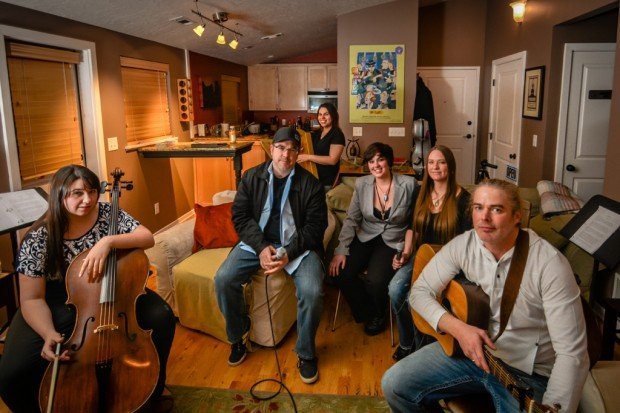
    By then, Valentine and Mitchell had brought in vocalist Tehya Fencik to join them on stage and in the studio. More recently, True Story has also added Abigail Sykes and Kathleen Clark as vocal harmonic backup, as well as harpist Kat Sherwood and cellist Stephanie L’Hereux. But, even as the group expands, True Story remains the stories of Eric Valentine and the music of Anderson Mitchell.

    As True Story’s repertoire grows, so does their following. In just seven months
    Valentine and Mitchell have composed no less than seven new pieces and have performed their works everywhere from privately hosted house parties and The Crux to Radio Boise and Story Story Night.

    Both Valentine and Mitchell contribute much of True Story’s success to the support and encouragement of Rich O’Hara and the Idaho Songwriter’s Association. “True Story would just be an idea in a living room without the ISA and their support,” says Valentine. Mitchell agrees, but expands on the idea by adding that the ISA has been instrumental in “crowd-sourcing the community to bring this project to life.” Which, he feels, is something unique to the ISA and the Boise community.

    When asked what’s next for True Story, Valentine replies, “Everything’s on the table.” And indeed, it seems to be.

    The group will be performing at Modern Art in room #116 on May 2, as well as at The Boise Co-Op’s First Friday event on June 7, and again at the 40th Anniversary Block Party June 22. True Story will also be performing at Meridian Summer Arts Festival June 29 and 30, as well as at the ISA’s Headliner Series at the Sapphire Room later this summer.

    To learn more about True Story and the men behind the magic, visit their website at www.truestory-band.com. The website features video of live performances, an updated calendar of events and information on booking the act for performances across the valley and beyond. True Story can also be found on Facebook under ‘True Story Project’.

    Ride Idaho

    0

    By Angela Watcher

    For those longing to experience Idaho’s scenic highways and byways from the saddle of a road bike, Ride Idaho is the place to be. This seven-day, fully supported bicycle tour features different regions of the Gem State each August, with this year’s region being the Panhandle.

    On January 16 this year’s ride was revealed at a kickoff party hosted by a local pub in downtown Boise. With only 350 spots available to cyclists, the online registration filled up quickly and the waiting list began. Many riders mark their calendar for this annual event and return year after year to enjoy Idaho’s nostalgic history, natural beauty and local hospitality.

    “Each year, as we move our route around the state, we try to showcase the history and culture of the region,” says Ride Idaho director, Earl Grief. “We include special attractions that may only be found in rural areas. Some of this year’s highlights include, The Bird Aviation and Invention Museum in Sagle, The Hiawatha Trail at
    Lookout Pass, the Cataldo Mission, and the infamous Trails of the Coeur d’Alene.”
    “For many of us, we keep coming back because of the amazing people, the experience itself and, of course, the beauty that each ride offers,” commented one rider at the event’s launch party.

    And what an experience it will be. With daily rides ranging from 61 – 87 miles the ride will loop Coeur d’Alene, Sandpoint, Thompson Falls, Wallace, Chatcolet and back to Coeur d’Alene for a total of 425 miles ridden and an elevation gain of
    15,570 feet.

    Thankfully, the ride is fully supported by a volunteer staff and offers road support, luggage transportation, bike mechanics and generously stocked rest stops, making each day an epic adventure rather than a grueling chore.

    In addition to the road support offered by the event, Ride Idaho is also a fully supported camping adventure as well. Riders can supply their own gear or have it provided by the event, and camping locations are outfitted with full catering, shower trucks and restrooms, and even an onsite massage service. While some riders opt to arrange their own accommodations in nearby motels, the real heart of the event is found in the campgrounds at the end of each day’s ride.

    Whether you’re a first time rider or a seasoned veteran, this year’s ride promises to be an event to remember. To learn more about the event, its route, rider services and rules of the road, visit the Ride Idaho website at http://www.rideidaho.org. And, while this year’s ride is full, there are plenty of volunteer opportunities still available for those wanting to participate in the fun.

    “If you enjoy riding a bike and making new friends, put Ride Idaho on your to-do list!” says Grief. And be sure to check back early in 2014 to see where the next year’s ride will take Idaho cyclists.

    The Natatorium: Still Making a Splash After All These Years

    0

    By Pamela Kleibrink Thompson

    As The City of Boise’s first public swimming pool, The Natatorium has been Boise’s place to be come summer for over 120 years. For many families, The Natatorium is a family tradition; indeed, many of the children swimming at The Nat this summer will be splashing around in the same waters their great-grandparents swam in years ago.

    The Natatorium opened on May 25, 1892. The Nat’s six-story Moorish towers and four floors of galleries overlooking the geothermal pool made it Boise’s most exotic building. The perfect location to display the grandeur of Idaho at the turn of the century, The Nat was the site of Idaho’s first Inaugural Governor’s Ball in 1901. A cover slid over the 65’ x 125’ enclosed hot water swimming pool so it could serve as a dance floor just like in the movie “It’s a Wonderful Life.”

    The 15,000 square foot building contained the largest indoor swimming pool in the country and included rooms for billiards, card playing, smoking, reading, and dining, as well as Turkish baths, hot tubs, steam tubs and a bar. In 1914 Hiram T. French named the landmark Natatorium “The Taj Mahal of the West.”

    After 40 years, the steam from the hot water damaged the wooden structure and the roof was rotting. Boise citizen Clarence Moser describes a windstorm at the Nat in 1934: “There was a big storm outside. We got down to the shallow end and we hadn’t been down there five minutes ‘til one of those big beams fell down in the pool. And lucky it never hit a person. Everybody come out of there, they condemned it then.”

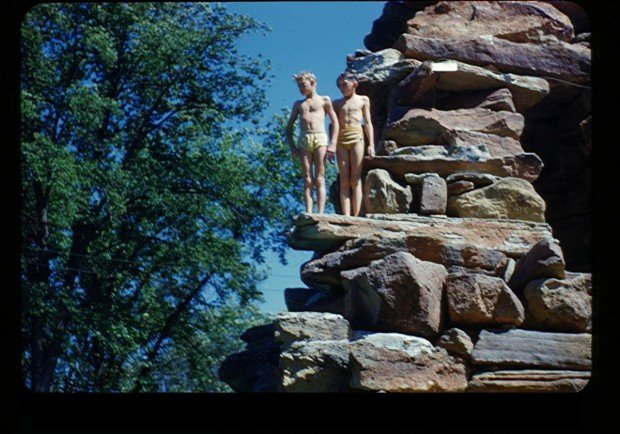
    The Natatorium’s building was demolished but the pool remained, although it was no longer filled with geothermal water. Doug Copsey of Boise fondly remembers the Nat: “As a young boy growing up in Boise in the 1950s and 60s its welcome relief from the summer heat was only a bike ride away, and many a hot afternoon was spent there. The original building was long gone by the time I started using the pool, but they left the huge stone diving platform there for many years. There was a rope pontoon line about halfway down the length of the pool that divided the shallow end from the deep end. You had to be able to swim two laps across the pool and back before you were allowed to swim in the deep end.”

    Today’s kids are still making great memories at The Natatorium. There are two pools now, a snack bar, a picnic area, and, of course, the Hydrotube. The main pool has two diving boards and runs in depth from 3 feet to 12 feet. The water temperature is cool but not cold. The smaller wading pool has a gently sloping floor so little ones can play in water that is only toe-deep if they are timid, and is ideal for children 4 and under. There are deck chairs and umbrellas available, but these fill up quickly, so many folks set up camp on the sprawling lawn underneath the Hydrotube.

    The Natatorium is located at 1811 Warm Springs Ave, right behind Adams Elementary School. For more info about hours, fees and swim lessons visit http://www.cityofboise.org

    Out East: High Desert Party

    0

    By Laura Wolstenholme

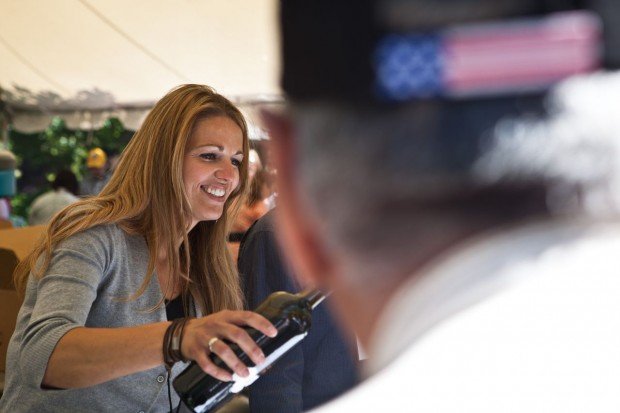
    On Sunday, June 9, anyone hiking the Boise foothills near Table Rock may think they’re seeing a mirage through the heat and dust of the afternoon sun. In the valley below, hundreds of people will be seen meandering on lush garden paths edged with vibrant flowers. They will be laughing and chatting away while consuming delightful wines and succulent food under the cool, flickering leaves.

    Amazingly, this site is not a mirage, but a true oasis. This is Savor Idaho.

    Savor Idaho began five years ago as a way to bring Idahoans together to celebrate our state’s food and wine. Since then, Idahoans from every corner of the state, and indeed the Northwest, arrive in Boise to enjoy this annual event. This year, guests will have the opportunity to sample wines from 25 wineries across Idaho, as well as the culinary fare of fourteen regional chefs.

    Moya Shatz Dolsby, who created Savor Idaho, explains that when living in Seattle she organized and directed “Taste Washington” a large, in-door event that highlighted Washington’s wines and food. After moving to Idaho, Dolsby wanted to initiate something similar but on a smaller scale and outside, an event to take advantage of Boise’s beautiful summer weather.

    The event has flourished since its inception. Always on the second Sunday afternoon of June when Boise’s skies are blue and sunny, the 900 tickets sell quickly, and the event is typically sold-out at least a week in advance. Dolsby says they could add more tickets, but prefer to keep the event smaller so that guests don’t feel crowded.

    Tickets are purchased in advance, in an effort to save guests from the hassle of on-site transactions as they enjoy the food and wine.

    Not only does Savor Idaho showcase the wine and food of Idaho, but you can catch a glimpse of Idaho’s personality as well. “The event is very casual, very nice,” says Dolsby, “But at the same time, sophisticated.” Having lived and worked in other states, Dolsby says Idahoans are distinct in their values. She says, “Idahoans are just oriented to family, friends and making new friends,” and that’s what makes Savor Idaho a real party.

    Savor Idaho is a slightly different experience each year as new dimensions are introduced. Adding to the fun in the last couple of years is a vertical ‘Wheel of Wine’ game, through which guests can win a bottle of wine, as well as seminars about topics such as how to taste wine and the history of Idaho wineries and, this year, a wine shop organized by the Boise Co-op will be on-site so that guests may purchase the wine the wines they fall in love with.

    To learn more about the event, the wineries and the food that will be featured at the year’s Savor Idaho, please visit http://www.savoridaho.org.

    Tickets are still available at $45 each, and may be purchased from the event’s website.

    Canvas Castles

    0

    By Liza Long

    Spectacular views, comfortable camping and the solitude of Idaho’s wilderness are all a part of Idaho’s backcountry yurt experience. Add in a few good friends, some great food and good beer, and you’ll have a weekend to remember regardless of the time of year.

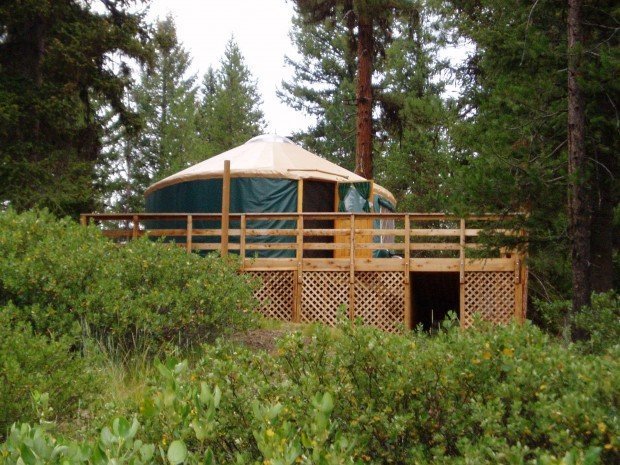
    Idahoans and tourists alike enjoy yurts as a way to return to nature without abandoning the comforts of home. Four Idaho State Parks—Winchester, Harriman, Lake Cascade and Castle Rocks—all feature Mongolian-style yurts, complete with plywood floors, canvas and hardwood walls and a central skylight. The yurts can sleep up to six people and are ideal for camping year-round.

    Boisean Frances Scott remembers her trip to the Lake Cascade yurt fondly, “It had been pouring our entire trip,” she said. “When we stumbled inside, it was like a little piece of heaven.”

    Although you can’t drive up to and park at the yurts, it doesn’t take much physical effort to enjoy the peace and solitude of nature that Idaho’s yurts provide. During the winter, a two-mile ski or snowshoe trip will get you to the front door; and in summer, a one-mile hike is all it takes to trek into your home away from home.

    If you’re looking for something a little closer to Boise, the Elkhorn yurts near Idaho City are less than two hours north of Boise on Highway 21. The Banner Ridge backcountry yurt is another popular choice, given its breathtaking views of the South Fork of the Payette River and its access to skiing in winter and hiking or biking in summer. A nearby backcountry road descends to Kirkham Hot Springs, a popular soaking destination near Lowman. Jason Grundy of Eagle remembers one winter trip to this yurt, “It was the first time I had ever cross-country skied,” he says with a grin. “I towed the beer sledge.”

    The yurts are fully equipped with two sets of single bunk beds, a futon, mattresses and sheets, a dining table with six chairs, a propane cook stove, two propane lanterns and a wood stove to keep you warm at night. Pots and pans, eating utensils and towels are also provided. Solar lighting was recently installed in all six backcountry yurts as well. Outside, you’ll find a primitive toilet, a fire pit, a picnic table, deck chairs and a woodpile.

    Frances Scott recommends yurts to anyone who hasn’t tried them. “It’s like having your own canvas castle.”

    Idaho’s backcountry yurts are available May 1 – October 31 at $55 for a weekday night or $65 for a weekend night. During the winter months, November 1 – April 30, they run $75 for a weekday night, $90 for weekend nights. There is also a $10 (+ tax) non-refundable reservation fee charged at the time of booking.

    Dogs are allowed year-round at all yurts with one exception; from Dec 1st to April 15th dogs are NOT allowed at Banner Ridge or Elkhorn yurts.

    For more information or to make a reservation, visit http://www.parksandrecreation.idaho.gov

    North End: The Stories Elisabeth Sharp McKetta Tells

    0

    By Nicole Sharp

    Local Boise resident and poet Elisabeth Sharp McKetta kicked off National
    Poetry Month with the release of her debut collection, “The Fairy Tales
    Mammals Tell.”

    Admittedly, I am not a huge poetry fan; so I began reading McKetta’s book with a
    Scrooge-like skepticism, “Poetry; bah, humbug.” However, as I turned the pages
    I found that one finely crafted poem lead to the next and soon felt as if I was being gently rocked by the cadence of her words. It was as if McKetta’s poems whispered themselves to me and I was swaddled in loveliness.

    It could be the overwhelming love of being a mother that seeps out of so many of her works, or the ability to captivate her readers with eloquent and subtle phrasing that caught me. Either way, this lovely collection may seem delicate at first, but the heart is pure strength.

    McKetta has a welcoming and easy spirit. She is one of those people you want to sit down with and talk to at length. She speaks quickly, but with the same grace that is found in her poetry. The pure excitement she gets from talking about writing radiates. While she confides that she is most confident writing essays and poetry, she “traffics in all forms of writing as a playwright, poet, fiction writer, and essayist.”

    When asked if she had always been a writer, McKetta claims that while growing up in Texas, she “scratched out poems,” but it wasn’t until her college years that she decided to follow the passion for writing.

    During her time studying Literature at Harvard she joined a writing group, which inspired her so much that she stayed an extra year just so she could remain part of it. Her experience with this group, and college, brought about her dedication to the craft.

    However, she claims to be a procrastinator at heart and says that it wasn’t until she became a mother that she found the discipline for writing as well as the ownership of being a writer. “I learned with a child that if I had 30 minutes to write, that I had to write in that 30 minutes.”

    As McKetta discussed her influences, she said that during her formative years it was F. Scott Fitzgerald who left a big impression and later the novels of Jeanette Winterson. But the decision to write professionally came from Hope Hale Davis, McKetta’s first writing teacher. “I loved how her life held all the components I hoped mine might one day have: writing, teaching and family. She was my teacher for several years, from 1999 until she passed away at age 101 in 2004.”

    Indeed McKetta’s life has all the components she’s hoped for, and now she can add her debut collection to the list. For many years McKetta has been compiling her poems and trying to find the right balance. When she placed the mammal/motherhood theme together, “this particular selection worked.”

    “The Fairy Tales Mammals Tell” is available for purchase on McKetta’s website www.elisabethsharpmcketta.com or though the publisher, The Monkey Puzzle Press.

    Linen District: Literature Illuminated

    0

    By Jamie Dillon

    Aaron Stanton knows novels. In fact, he can probably recall hundreds of details about the inner workings of stories in nearly any genre. He can talk effortlessly about the prominence of religious hierarchy in Dan Brown’s “Da Vinci Code.” He can argue with conviction that of the two vampire stories, Anne Rice’s “Interview with the Vampire” is in fact more, well, vampire-y than Stephanie Meyer’s “Twilight.” He knows the latest works of lesser-known authors, including some who call Idaho home.

    The difference between this Boise entrepreneur and other bibliophiles, however, is this: He can do it without ever cracking a cover and reading what’s inside.

    BookLamp.org is the home of the Book Genome Project; a concept Stanton started putting in motion a decade ago. Similar to how Pandora.com selects music based on a listener’s preferences, BookLamp helps readers find books through computer-based analysis.

    Run from the high-tech incubator space in the Linen District called The Watercooler, BookLamp can be particularly beneficial to publishers looking to discover authors who have a similar voice, pace and dialog style to the latest top seller. It’s because of this compiled information that people like Boise author Raym Richards know how their novels compare to others on the market.

    Categorized as a science fiction novel, the concept of Richard’s book, “An Earth Scorned” came from his concern about the environment, the collective’s increased reliance on oil and the government’s protection of it. While he was able to do research to build fictional characters and communities and a compelling story, Richards wasn’t sure how his book compared to other similar works.

    But now he knows.

    Because of BookLamp’s metrics, Raym learned that his book’s density and pacing is comparable to “Your Life, Uploaded” by Bill Gates. His dialog is reminiscent to “The Accidental Time Machine” by Joe Haldeman and “Timescape” by Gregory Benford. Stanton reminds authors who use BookLamp to gain a better understanding of their books’ mechanics that learning that their books are denser or slower — or lighter and faster — than the average doesn’t mean their book isn’t just as it should be.

    “We’d never suggest what an author wrote or how it was written should be changed to reflect the average,” Stanton said. “How long should an author’s book be? As long as it needs to be.”

    “Being an unknown and getting your work compared to recognized authors gives me plenty of data worth knowing. The report shows where I was heading in the right direction and helps validate me. If categorized by these metrics would “An Earth Scorned” be right next to the DaVinci Code? Maybe not. But would it be one shelf down and over a few feet? Yeah, maybe, and that’s great.”

    More importantly, the BookLamp findings have given Richards the motivation to finish the follow-on to his debut.

    “I can leap into the next one without too much worry, and what’s nice is that I have key elements to focus on. I can get the dialog tighter. I can modify my pacing and sharpen my descriptions.”

    “BookLamp’s engine isn’t influenced by advertising budgets or popularity bias,” Stanton said. “Unlike social engines, we don’t punish new authors for being new, or ignore them for being unknown. We connect readers

    Garden City: Technology Toyland

    0

    By Liza Long

    In the industrial stretch of Garden City, tucked away on West 33rd Street, is one of the Treasure Valley’s most unusual treasures. Part museum, part fabrication lab and part surplus store, the Reuseum is a place where old technology goes to die—and is resurrected as something new.

    “We’ve got parts,” manager David Ultis grins as he gives me a tour, starting with the “museum” section, where director John Schiff displays pioneering technologies including a stair climber robot, a prototype unmanned aerial vehicle (UAV) that was the precursor of today’s infamous drones and a receiver used for simulation in the Galileo space mission, which sent an unmanned probe to Jupiter.

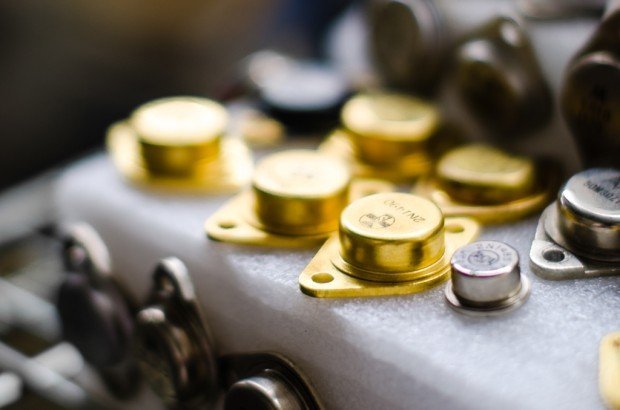
    In addition to parts—including everything from servomotors and millable plastics to computer pieces, transistors, and switches—the Reuseum also has a smelting furnace and other lab equipment and stocks every kind of personal protective equipment imaginable—from lab coats to full-on radiation suits.

    So what can people do with all this stuff?

    S.T.A.B.B.Y, the store’s human-sized robot sculpture, is one possibility. “Many people wouldn’t consider this kind of thing as an option because it would normally be too expensive,” says Ultis. “We provide inexpensive raw materials for artists, hobbyists, and inventors to create things. It’s just a great place to get ideas and gain resources.”

    The Reuseum also conducts workshops for schools and Scout groups. On the day I visited, a group of third graders from Sage International School in Boise had just made their first robots. “We would like to offer a robot kit using recycled parts,” Ultis says. “At most hobby shops, those kinds of things are out of most people’s price range. But here, we have access to inexpensive materials.”

    The Reuseum has also become a meeting place for Idaho’s thriving Maker community. A Maker is an artisan, coder, crafter, or performer—essentially, anyone who makes something. Every other Saturday, the workshop area buzzes with creative energy as the Idaho Maker community’s open lab provides a space for Makers of all stripes to compare ideas and design new technology. The community is busy preparing for the May Boise Mini-Maker Faire, which will take place Saturday, May 25 from 12:00-6:00 at the Boise Public Library and Sunday, May 26 from 9:30-5:30 at the Discovery Center of Idaho.

    And if you’re wondering what to do with your garage full of non-working computers and other technology, the Reuseum is your answer. They accept computers, flat screen displays, personal electronics, cell phones, and CRT monitors/televisions (these require a small processing fee). Your tax-deductible donations support free and low-cost educational scientific and technology workshops.

    “For anything we do here, we ask ourselves, ‘Will it benefit our community?’ Our goal is to use technology to make life better.” Ultis says. “The Reuseum is for anyone of any age who wants to explore, create, and learn.”

    To learn more about The Reuseum and all it offers, visit www.reuseum.org

    3,639FansLike
    5,898FollowersFollow
    2,623FollowersFollow